
| Copyright 2006-2017 KUNGFUBROTHERS.COM All Rights Reserved |

The Piano Action
The Piano Action


KUNGFUBROTHERS.COM
 |  |  |  |
Renner Piano Action Models

Renner USA
Grand Action Model
Approved for use in the
Piano Technician's Guild
Examinations
Available at the PTG Store
Grand Action Model
Approved for use in the
Piano Technician's Guild
Examinations
Available at the PTG Store
Renner Germany
Grand and Upright
Action Models
Available Online
Grand and Upright
Action Models
Available Online
Detoa Piano Action Models


Detoa - Czech Republic
Grand and Upright Action Models
Available at the UK Association of
Blind Piano Tuners Website
Grand and Upright Action Models
Available at the UK Association of
Blind Piano Tuners Website
| "Where can I buy a Piano Action Model?" |

Detoa - Czech Republic
Grand and Upright Action Models
(Frame Mounted - No Keys)
Available from a UK Website
Grand and Upright Action Models
(Frame Mounted - No Keys)
Available from a UK Website
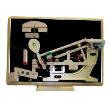


Grand Piano Action
Upright Piano Action
Upright Piano Action Model
Grand Piano Action Model
Modern Grand and Upright Pianos
The name "Piano" means "Soft" in Italian, and is an abbreviation of the
original name "Pianoforte" meaning "Soft-Loud". This name described
the instrument's ability to produce both soft and loud sounds. The
precursor to the piano was the harpsichord, which is also a keyboard
operated stringed instrument, however instead of hammers striking the
strings, it used quill or leather plectra to pluck the strings. This plectra
based mechanical action limited the ability of the instrument to produce
sounds of varying volume. Bartolomeo Cristofori, an Italian harpsichord
maker, is credited for inventing the piano in 1709, by replacing the
plectra based action with a hammer based one, and thus allowing
musicians greater musical expressiveness. This replacement with
hammers may sound like an obvious and easily implemented idea,
however it required inventing a completely new mechanism. The problem
was this: how to press a key down, and cause a hammer to strike the
strings in a touch responsive manner without having the hammer lock up
against the string. The solution that Cristofori came up with is known as
"Escapement", and it signalled the beginning of a musical revolution.
original name "Pianoforte" meaning "Soft-Loud". This name described
the instrument's ability to produce both soft and loud sounds. The
precursor to the piano was the harpsichord, which is also a keyboard
operated stringed instrument, however instead of hammers striking the
strings, it used quill or leather plectra to pluck the strings. This plectra
based mechanical action limited the ability of the instrument to produce
sounds of varying volume. Bartolomeo Cristofori, an Italian harpsichord
maker, is credited for inventing the piano in 1709, by replacing the
plectra based action with a hammer based one, and thus allowing
musicians greater musical expressiveness. This replacement with
hammers may sound like an obvious and easily implemented idea,
however it required inventing a completely new mechanism. The problem
was this: how to press a key down, and cause a hammer to strike the
strings in a touch responsive manner without having the hammer lock up
against the string. The solution that Cristofori came up with is known as
"Escapement", and it signalled the beginning of a musical revolution.
The Piano Action

Oldest surviving Cristofori piano, 1720
Metropolitan Museum, New York
Metropolitan Museum, New York

Cristofori Escapement Action

Modern Grand Piano

Modern Upright Piano
The similarity in the shape and mechanism between
Cristofori's pianoforte and that of the modern grand
piano is evident. There have been several
innovations in its structure and its action design
over the past 300 years, however its essence has
remained very much unchanged. The invention of
the first true upright piano (also known as "vertical"
piano) is credited to John Isaac Hawkins in 1800.
Hawkins was an Englishman living in Philadelphia,
who had a gift for mechanical experimentation. He
patented the first upright piano, featuring vertically
Cristofori's pianoforte and that of the modern grand
piano is evident. There have been several
innovations in its structure and its action design
over the past 300 years, however its essence has
remained very much unchanged. The invention of
the first true upright piano (also known as "vertical"
piano) is credited to John Isaac Hawkins in 1800.
Hawkins was an Englishman living in Philadelphia,
who had a gift for mechanical experimentation. He
patented the first upright piano, featuring vertically
oriented strings and soundboard. This novel looking instrument, that he called a "portable grand", occupied
much less space, and could be more easily moved. For this new orientation, a new form of action mechanism
was required. Gravity assists the return of the hammers to their place of rest in a grand piano, but in an
upright piano another means was needed. John Hawkins successfully devised a method of using springs for
this purpose.
much less space, and could be more easily moved. For this new orientation, a new form of action mechanism
was required. Gravity assists the return of the hammers to their place of rest in a grand piano, but in an
upright piano another means was needed. John Hawkins successfully devised a method of using springs for
this purpose.
Piano Action Models are essentially
working models of the piano
mechanism for a single key. They
are great tools for piano students,
teachers, and technicians to learn
about how the piano functions. It
also makes an interesting curio for
the shelf.
working models of the piano
mechanism for a single key. They
are great tools for piano students,
teachers, and technicians to learn
about how the piano functions. It
also makes an interesting curio for
the shelf.
Action Regulation
Regulation is the precise adjustment of all the moving parts of the piano
action. The result of good regulation is a smooth, even feel when playing
that gives the pianist a feeling of fine control.
The most sensitive parts of your body are your lips and fingertips. In each
fingertip there are about 100 touch receptors. Place a piece of regular
copy paper flat on a table, and run your finger over an edge. The
thickness those touch receptors sense, is around 0.08mm. With that
degree of touch sensitivity, piano action regulation is a very precise task.
Every note in a typical upright piano action has over 25 points of
adjustment. Regulation includes the adjustment of functions such as: key
level, key height, depth of touch, hammer alignment, dampers, let-off, lost
motion, centre pins and bushings for the hammer flange, jack flange,
wippen flange...and several other component relations.
There are more points of adjustment in a grand piano action. Typically
over 35!
action. The result of good regulation is a smooth, even feel when playing
that gives the pianist a feeling of fine control.
The most sensitive parts of your body are your lips and fingertips. In each
fingertip there are about 100 touch receptors. Place a piece of regular
copy paper flat on a table, and run your finger over an edge. The
thickness those touch receptors sense, is around 0.08mm. With that
degree of touch sensitivity, piano action regulation is a very precise task.
Every note in a typical upright piano action has over 25 points of
adjustment. Regulation includes the adjustment of functions such as: key
level, key height, depth of touch, hammer alignment, dampers, let-off, lost
motion, centre pins and bushings for the hammer flange, jack flange,
wippen flange...and several other component relations.
There are more points of adjustment in a grand piano action. Typically
over 35!
Making all of these adjustments 88 times (once for each note) for
an upright or grand piano may require a great deal of effort
depending on the condition of the piano.
Different piano manufacturers perform different qualities of
regulation on their new pianos before they are delivered. Some
pianos are very much out of regulation when they arrive in the
home. All pianos though, will gradually go out of regulation as they
are played year after year as the felt parts compress and the
hammers become worn.
Some symptoms of a piano being out of regulation are: keys are
not level, some keys can be pressed further down than others,
lack of forceful sound even when a key is struck hard, or uneven
volume when pressing different keys with the same force.
No two pianos will feel exactly the same when played, but ideally all
of the notes on a particular piano should have the same feel.
an upright or grand piano may require a great deal of effort
depending on the condition of the piano.
Different piano manufacturers perform different qualities of
regulation on their new pianos before they are delivered. Some
pianos are very much out of regulation when they arrive in the
home. All pianos though, will gradually go out of regulation as they
are played year after year as the felt parts compress and the
hammers become worn.
Some symptoms of a piano being out of regulation are: keys are
not level, some keys can be pressed further down than others,
lack of forceful sound even when a key is struck hard, or uneven
volume when pressing different keys with the same force.
No two pianos will feel exactly the same when played, but ideally all
of the notes on a particular piano should have the same feel.
To view our gallery of action models
and a listing of previously owned or
vintage models for sale, follow this
link: Action Model Gallery
Brand new action models are
available through various sources
as listed below:
and a listing of previously owned or
vintage models for sale, follow this
link: Action Model Gallery
Brand new action models are
available through various sources
as listed below: